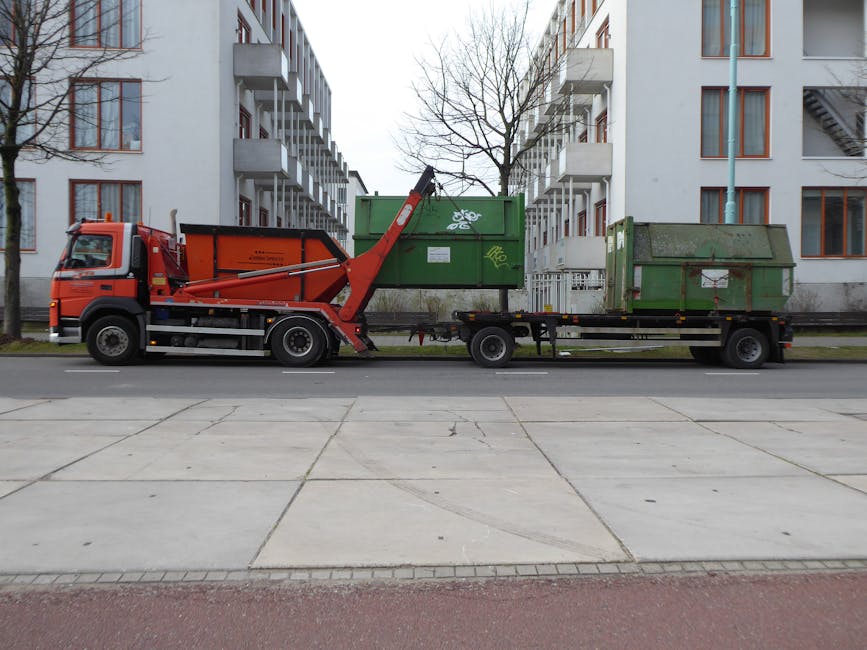
Compare Skip Hire vs Man-with-a-Van in Feltham for Less Cost
If you are clearing out a home, flat, garage, office, or garden in Feltham, the money question usually comes first: should you book a skip or hire a man-with-a-van? It sounds simple enough, but the cheaper option depends on how much waste you have, how quickly you need it gone, where it sits, and whether you can load it yourself. That is where a proper compare skip hire vs man-with-a-van in Feltham for less cost approach really pays off.
In this guide, we will break it down in plain English. You will see how each option works, where the hidden costs tend to appear, which situations suit each service best, and how to avoid paying for convenience you do not need. We will also cover compliance, best practice, and a few common traps people hit when they are trying to save a bit of cash. Let's face it, nobody wants to spend more than necessary on waste removal.
Why Compare Skip Hire vs Man-with-a-Van in Feltham for Less Cost Matters
The phrase "cheapest waste removal" can be misleading. The headline price of a skip often looks straightforward, but the final bill can shift once you factor in permits, driveway space, skip size, hire duration, and whether you need a heavier-duty container. A man-with-a-van service may look more flexible, yet if the team has to do several trips or you are dealing with bulky furniture, the quote can climb quickly.
In Feltham, that comparison matters even more because space can be tight. A skip on the road may need planning, and if you are in a flat, a terraced house, or a property with awkward access, loading a skip is not always the easy option it seems on paper. On the other hand, if you have a weekend's worth of mixed household clutter and good access to your drive, a skip may be very sensible.
The real question is not "which is cheaper in general?" It is "which is cheaper for my job?" That subtle shift saves people money all the time. A small clear-out in a garage, for example, may be overkill for a skip. But a strip-out after renovation, with rubble, timber, and old fixtures, might be a poor fit for a van-only collection. Different jobs, different economics.
If you are already looking at broader clearance options, it can help to compare them against services such as waste removal or more specific clearing jobs like house clearance and office clearance. The detail matters. A lot.
How Compare Skip Hire vs Man-with-a-Van in Feltham for Less Cost Works
Both services remove waste, but the process is very different.
Skip hire
With skip hire, a container is delivered to your property or a suitable roadside location. You fill it yourself over the agreed hire period, then it is collected. That means you control the loading pace, which is ideal if you are sorting through items gradually or working around family life. The downside is that you do the lifting, and the skip can sit there taking up space until collection day.
For many people, the key cost drivers are size, duration, and whether a permit is needed. If you only fill half a skip, you may still have paid for the full unit. If you under-estimate and need a second skip, that is where the bargain disappears. Happens more often than people admit, to be fair.
Man-with-a-van
A man-with-a-van service is usually booked by volume, type of waste, labour needed, and access. The team arrives, loads the waste for you, and takes it away in one visit or a small number of visits. This is often attractive when you want speed, convenience, or help with heavy items. It also makes sense if you cannot physically move furniture or you live up a few flights of stairs. That last point is more common than you might think in Feltham flats and converted houses.
However, the quote can change depending on how much is actually there when the team arrives. If the pile is bigger than described, the price can rise. If items need extra handling, sorting, or dismantling, that can also add to the cost.
For mixed loads, especially old furniture or awkward household items, it can be worth looking at linked services like furniture clearance and furniture disposal. Those pages are useful if your waste is not just general rubbish but actual bulky items that need careful handling.
The cost logic behind both
Think of it like this: skip hire charges you for space and time. Man-with-a-van charges you for labour, loading, and convenience. If you are doing the lifting and need time, the skip often wins. If you need the lifting done for you and want the job over quickly, the van service may win. Simple, but not simplistic.
Key Benefits and Practical Advantages
There are good reasons people choose both options. The smartest choice depends on what you value most.
Why skip hire can save money
- Best for DIY sorting: You can load as you go, which suits clear-outs stretched over a day or two.
- Useful for heavy, mixed waste: Renovation debris, garden waste, and general clutter can often go in one container if the provider allows it.
- Fewer labour charges: You do the work yourself, so you are not paying for a loading crew.
- Good for larger jobs: If the volume is substantial, one skip may be better value than several van trips.
Why a man-with-a-van can save money
- No container sitting outside: Useful where space is limited or neighbours are sensitive about road clutter.
- Labour included: You are not spending your own time hauling heavy stuff down stairs or through narrow hallways.
- Fast turnaround: Often ideal for same-day or next-day removal.
- Better for smaller loads: If you have a moderate pile, you avoid paying for unused skip capacity.
One practical advantage that gets overlooked is decision fatigue. A clear quote and a simple collection can be worth more than a slightly lower headline price if the job is stressful. When people are clearing a property after a move, a bereavement, or a lease end, the "cheapest" option is not always the least expensive in real life.
If your project includes a specific room or building type, the service pages can help you narrow things down. For example, flat clearance, home clearance, and garage clearance each align with different access and load patterns.
Who This Is For and When It Makes Sense
This comparison is most useful if you are trying to decide how to move waste cheaply without making the job harder than it needs to be. A few common situations stand out.
Skip hire tends to suit you if:
- You have a larger amount of waste and can fill a container efficiently.
- You are happy doing the loading yourself.
- You have driveway space or can arrange roadside placement.
- You are clearing over several hours or days rather than needing immediate removal.
Man-with-a-van tends to suit you if:
- You have bulky or heavy items and need help lifting them.
- You are short on time and want the waste gone quickly.
- You live in a property where access is awkward.
- You only have a moderate volume and do not want to overpay for unused capacity.
It also depends on the type of waste. Builders' rubble and mixed construction debris behave differently from old sofas or office desks. Garden clippings are a different beast again. For building work, the more relevant option may be builders waste clearance. For commercial premises, business waste removal or office clearance may be the cleaner fit.
And if you are not really sure what category your rubbish falls into, that is fine. Loads of people are in that position. The main thing is to match the service to the load, not the other way around.
Step-by-Step Guidance
If your goal is to cut cost without cutting corners, use a simple decision process. No need to overcomplicate it.
- Estimate the volume honestly. Walk the space and note what is actually going. Bags, boxes, furniture, rubble, branches, mixed junk - list it all.
- Check access. Ask whether the waste can be taken out easily, whether stairs are involved, and whether a skip would block anything important.
- Decide who does the lifting. If you can load it yourself, skip hire may work well. If not, van collection becomes more attractive.
- Think about timing. Need it gone today? That favours a van. Happy to fill it over a few days? A skip may be better.
- Ask about restrictions. Some waste types are not allowed in certain containers or need special handling. Paint, plasterboard, and electricals can be different from normal household waste.
- Compare like for like. A cheap skip quote is not comparable to a loaded service unless you include labour, permit costs, and the time you will spend doing the work yourself.
- Choose the lowest true cost, not the lowest advertised price. This is the bit people miss. The headline figure is only part of the story.
If you want a more formal pricing conversation, it can help to look at pricing and quotes before you commit. Clear pricing makes comparison easier, and easier is usually cheaper in the end.
Expert Tips for Better Results
Here are the little things that often make the biggest difference. Not glamorous, but useful.
1. Sort before you book
Separate reusable items, recyclable material, and true waste before asking for a quote. Even a rough sort can reduce the volume you pay to remove. It also makes the collection day feel less chaotic, which is a pleasant side effect.
2. Measure the awkward bits
Big wardrobes, mattresses, broken appliances, and garden waste can take more room than you expect. A pile that looks manageable in the corner of a room can suddenly become a small mountain on the driveway. Funny how that happens.
3. Be realistic about your own time
People often forget to price their own labour. If it will take you half a day to load a skip, plus more time to move rubbish around, a man-with-a-van might be better value even if the invoice is higher. Your Saturday has a value too.
4. Ask what is included
With any quote, check whether labour, loading, disposal, and heavy-item handling are included. With skip hire, ask about delivery, collection, waiting time, and permits if relevant. It sounds obvious, but the difference between "seems cheap" and "actually cheap" is usually hiding in the details.
5. Match the service to the job type
For example, lofts, garages, and basements often involve slower sorting and heavier lifting, so a full-service collection can be worth it. For a tidy renovation pile, a skip might be simpler. If you are clearing a loft, the right service can save your back as much as your budget. No one wants to carry dusty boxes down stairs more than once.
For more specialist situations, the supporting pages can be helpful: loft clearance for storage-heavy spaces and garden clearance for outdoor waste that often arrives in oddly shaped, bulky loads.
Common Mistakes to Avoid
A few simple mistakes can turn a cost-saving plan into a more expensive mess. The good news is that they are easy to avoid once you know them.
- Booking too small a skip: This is one of the quickest ways to spend more. If you are close to the limit, you are probably underestimating.
- Ignoring access problems: Narrow alleys, stairs, and parking restrictions can change the value equation very quickly.
- Assuming all waste can go together: Different materials may need separate handling or different disposal routes.
- Forgetting about labour: If you have to carry everything yourself, the cheaper quote may not be the cheaper job.
- Not checking permit requirements: If a skip goes on a public road, permissions can matter. Always check before placing anything where it might cause an issue.
- Choosing only on speed: Fast is useful, sure. But speed alone does not mean value.
There is also a human mistake: choosing the option that feels familiar rather than the one that fits. People often default to skip hire because it is the obvious thing, even when they do not have the space, the time, or the manpower. Others go straight to van clearance and end up paying for convenience they barely needed.
Tools, Resources and Recommendations
You do not need fancy tools to make a sensible choice, but a few practical aids help a lot.
- Room-by-room list: Write down what is being cleared. Keep it plain and honest.
- Photo set: Take a few clear pictures of the waste from different angles. This helps avoid under-quoting.
- Rough volume check: Count large items separately. Sofas, wardrobes, mattresses, and rubble bags matter more than loose odds and ends.
- Access notes: Mention stairs, narrow doors, parking limitations, and distance from the property to the collection point.
- Sorting piles: Keep recyclable material separate where practical. It can make the job cleaner and may reduce unnecessary disposal effort.
It is also worth looking at wider service information when your clear-out has more than one angle. For example, if the job involves a mix of waste and recyclable material, the page on recycling and sustainability gives a useful sense of how responsible disposal fits into the process. If security, payment method, or booking confidence matters to you, payment and security is another sensible read.
And if you are dealing with a specialised clearance - maybe an old office unit, a full domestic move, or a house left full of furniture - the more tailored services can help you avoid paying for the wrong kind of support.
Law, Compliance, Standards, or Best Practice
Waste removal in the UK is not something to shrug off. Even when you are trying to save money, you still want the waste handled responsibly and lawfully. The exact rules depend on the waste type and the arrangement you choose, so it is wise to keep things straightforward: use a provider that explains what they take, how they manage it, and what happens after collection.
For householders, the big best-practice point is to avoid leaving waste in places where it becomes a nuisance or creates a hazard. For businesses, there is extra pressure to make sure waste is managed properly, documented where necessary, and removed in line with normal duty-of-care expectations. No one wants a cheap clear-out to become a compliance headache later.
If you are choosing between skip hire and a man-with-a-van, ask practical compliance questions:
- What waste types are accepted?
- Who is responsible for loading and safe access?
- What happens if the waste includes restricted items?
- Is the service insured and set up for safe handling?
That last one matters more than many people think. Safety is not just a box-ticking exercise. It is what stops a simple job becoming a messy one. For more on safe working practices and responsible handling, the site's health and safety policy and insurance and safety information are both worth a look.
Options, Methods, or Comparison Table
Here is the simplest way to compare the two options for a typical Feltham clear-out.
| Factor | Skip Hire | Man-with-a-Van |
|---|---|---|
| Best for | Larger loads, self-loading, longer clear-outs | Bulky items, faster turnaround, labour included |
| Effort required from you | High | Low to medium |
| Space needed | Needs a location for the skip | Minimal, usually just access for the vehicle |
| Speed | Slower, depends on filling period | Usually faster |
| Cost control | Good if you fill it efficiently | Good if the load is accurately described |
| Risk of overspend | Too-small skip or permit costs | Underestimating the volume or labour needed |
The table gives a good starting point, but real life is messier. A small flat clearance with a lot of heavy lifting can lean toward van collection, while a garage packed with mixed waste may suit a skip better. And yes, sometimes the answer is just "it depends". Not the most thrilling phrase in the world, but it is honest.
If you want services that already align with particular property types, there are useful options such as flat clearance and home clearance, both of which can be more cost-efficient than a generic waste solution for some jobs.
Case Study or Real-World Example
Imagine two common Feltham scenarios.
Example 1: The garage clear-out
A homeowner has old shelving, broken tools, a few bags of mixed junk, and some garden odds and ends. They have a driveway and a free weekend. In this case, a skip may be the better value because the space is available, the waste is mixed but manageable, and the homeowner is happy to load over time. If they are disciplined and fill it well, the cost per item can be quite sensible.
Example 2: The second-floor flat move-out
Another person needs to clear furniture, boxed belongings, and a couple of awkward items from a flat with stairs and limited parking. Here, a man-with-a-van starts looking smarter. The labour is built in, the team can work quickly, and there is no need to leave a skip outside all day. The quote might look higher than a small skip at first glance, but once you factor in the lifting, access, and speed, it can actually be the cheaper choice.
The best comparison is the one that reflects your own job. Not the neighbour's job. Not the one you saw on a forum at midnight. Yours.
Practical Checklist
Use this before you book anything.
- Have I listed everything that needs removing?
- Do I know roughly how much space the waste will take up?
- Can I load the waste myself, or do I need help?
- Is access easy enough for a skip or a collection vehicle?
- Will I need the service quickly, or can I spread the job over time?
- Have I checked whether any items need special handling?
- Do I understand what the quote includes?
- Have I thought about permit issues if the skip might go on the road?
- Would a tailored service like furniture, garden, loft, or office clearance be a better fit?
- Have I compared the total cost, not just the headline price?
If you can tick most of those boxes, you are already ahead of the average customer. Honestly, that alone saves time and money.
Conclusion
When you compare skip hire vs man-with-a-van in Feltham for less cost, the cheapest option is rarely the same for every job. Skip hire often wins on larger loads where you can do the lifting yourself and have room to place the container. Man-with-a-van often wins when access is awkward, time is tight, or the lifting is the main problem.
The smartest move is to judge the full picture: volume, access, labour, timing, and the type of waste. Once you do that, the decision gets much easier. You stop paying for the wrong kind of convenience, and that is usually where the real saving lives.
Get a free quote today and see how much you can save.
Whatever route you choose, a well-planned clearance feels lighter in every sense. Less clutter, less stress, less waste hanging around. And that is a very good feeling on a busy Feltham afternoon.
Frequently Asked Questions
Is skip hire cheaper than a man-with-a-van in Feltham?
It depends on the job. Skip hire is often cheaper if you can load the waste yourself and have enough volume to fill the container efficiently. A man-with-a-van can be better value for smaller or awkward jobs where labour is the main issue.
Which option is better for bulky furniture?
A man-with-a-van is often the better fit for bulky furniture because the team does the lifting. If you have enough items to fill a skip and can load them yourself, a skip may still be cost-effective.
Do I need a permit for skip hire in Feltham?
You may need a permit if the skip is placed on a public road rather than private land. The exact arrangement depends on where the skip sits, so always check before booking.
What is the main advantage of a man-with-a-van?
The main advantage is convenience. The crew loads the items for you, which saves time, avoids heavy lifting, and suits properties with poor access or stairs.
What type of job suits skip hire best?
Skip hire suits larger jobs where you can load waste gradually, such as renovations, garage clear-outs, or garden projects. It is especially useful when you do not need urgent removal.
Can I mix different types of waste in one collection?
Sometimes yes, but not always. Waste types can have restrictions, especially for items like rubble, plasterboard, electricals, and certain hazardous materials. Always confirm what is accepted.
How do I avoid paying too much for waste removal?
Estimate the volume honestly, describe the load clearly, and compare the total cost rather than the headline price. Also think about labour, access, and whether a tailored clearance service would be better.
Is a man-with-a-van good for flat clearances?
Yes, often very good. Flat clearances usually involve stairs, awkward access, and a need for speed, which makes a loading service practical and sometimes cheaper overall.
What if I only have a small amount of rubbish?
For a small amount, a man-with-a-van or a targeted waste removal service is often more economical than paying for a skip you will not fully use.
Should I choose based on price alone?
No. Price matters, but access, effort, timing, and waste type all affect the real cost. The cheapest quote on paper is not always the cheapest outcome.
Are there services for specific clearance jobs?
Yes. If your job is more specific, options like garage clearance, loft clearance, builders waste clearance, or garden clearance may be more efficient than a generic approach.
How do I know which option gives better value?
Work out who is loading, how much space the waste will take, how quickly you need it gone, and whether access is straightforward. That simple check usually points to the better-value option pretty quickly.