Office Clearance in Feltham

Office Clearance Feltham provides a straightforward commercial clearance service for workspaces, storage areas and business premises in the local area. The focus is on removing unwanted office contents in a controlled way, so desks, chairs, filing units, cabinets, electrical items and mixed office clutter can be dealt with as part of one organised visit. For businesses that need space made available for refurbishment, relocation or routine tidying, the service is designed to support practical decision-making rather than create more work for the customer.
Clearance requirements in an office are often different from household jobs because items may need sorting by type, handling carefully around shared corridors, or removing in stages to keep the site usable. We can help with business-focused clearance work that covers a range of interior spaces, from open-plan offices to back rooms and cupboards. If you are comparing options and need a clearer idea of the work involved, use the service pages and pricing information to shape an enquiry before you request a quotation.
Two simple steps often make the process easier: identify anything that must stay on site, and group obvious items that are ready to go. That does not mean you need to complete the sorting yourself, but it can help keep the visit efficient and reduce avoidable confusion. If your premises include mixed items such as furniture, paper-based material and general office waste, the service can be planned around the types of contents that are ready for removal.
Office furniture and workstation clearance
Office furniture is usually the core of a clearance job, so this service focuses on the practical removal of items that take up the most space and are the hardest to move without assistance. Desks, task chairs, meeting tables, filing units, pedestals, shelving and reception furniture can be handled as part of a coordinated clearance plan. The aim is to leave the room ready for its next use, whether that is a reset, a move or an internal reconfiguration.
When office furniture is being removed, access matters. Narrow stairwells, lifts, shared entrances and time restrictions can all affect how the work is organised. Some premises also contain fixed items that need to remain in place, which means the clearance has to be planned carefully around what is being taken and what must be protected. If you are unsure how to describe the job, start with the items that are definitely going and note any pieces that need careful handling.
For customers comparing furniture disposal options, it helps to separate the likely categories before asking for a quotation. Common examples include individual chairs, complete workstation clusters, storage cupboards and bulky items that cannot simply be lifted out by one person. If the job also includes cabinets with contents inside, that distinction should be made early so the work can be quoted and scheduled more accurately.
Business waste and mixed office contents

Not every office clearance is mainly about furniture. Many jobs also include accumulated business waste, packaging, archive material, broken office equipment and general clutter gathered over time in store rooms or under-used areas. A professional clearance approach helps deal with this mixed content in a single organised visit rather than forcing you to manage several separate removal tasks. That can be especially helpful in premises that need a quick reset before new furniture arrives.
Where mixed office contents are involved, the most useful approach is usually to separate reusable items from general waste and identify anything that needs particular care. Paper-heavy rooms, old stationery stocks, redundant displays and damaged fixtures may all need different handling. We provide a practical way to clear these spaces while keeping the work focused on the items that are actually ready to leave the premises. Business waste removal can be a useful option when the job includes more than furniture alone.
Useful preparation need not be complicated. If you can, make a note of the rooms involved, the general types of material present and whether access is straightforward or restricted. Photographs can also help, especially where there is a mixture of loose items, larger furniture and storage that has not been sorted recently. Those details make it easier to discuss the scope of the work and prepare a sensible quotation.
Clearance for relocations, refurbishments and office changes
Office clearance is often tied to a wider change in the way premises are used. A business may be moving out, refitting a floor, reassigning rooms or reducing the amount of storage kept on site. In those situations, the clearance needs to support the next stage of the project, not disrupt it. That means removing the right items in the right order and keeping the process manageable around other contractors or internal teams.
For relocation work, some customers want the office left ready for handover, while others need only selected rooms cleared so that the occupation can continue elsewhere in the building. A flexible clearance plan can reflect those differences. If there are objects that must remain for the next phase of work, it helps to highlight them when requesting the job. The same applies to shared areas, meeting rooms and ancillary storage spaces that are often overlooked until late in the process.
For larger changeovers, linked service pages can be useful when you need to compare scope. Office clearance is the main service, while home clearance and flat clearance show how other property types are handled, which can help if your request involves a mixed-use building or non-standard access. Choosing the right category from the outset reduces back-and-forth and helps keep the quotation focused on the actual work required.
How the clearance is usually planned
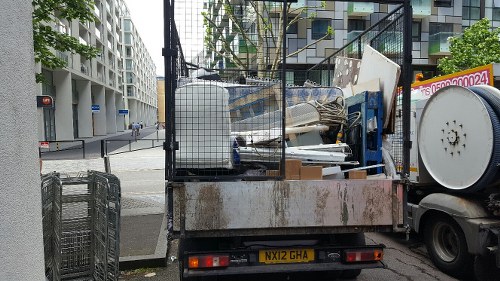
Good planning makes office clearance more predictable, especially when the premises contain several kinds of contents. A sensible first step is to identify the rooms or zones involved and note any items that are staying. From there, the likely volume, access route and timing constraints can be discussed in a practical way. That is usually enough to shape the quotation without turning the enquiry into a complicated exercise.
In many offices, the main challenge is not a single oversized item but a combination of smaller pieces that have built up over time. That may include files, broken chairs, packaging, obsolete peripherals, monitors, drawer contents and miscellaneous stock. A full assessment of the material helps decide whether the work is best approached as one visit or several passes. The clearer the scope, the easier it is to match the job to the right clearance method.
When you are preparing an enquiry, a short list is often more useful than a long explanation. Consider including the type of premises, the rooms involved, any access issues, and whether the job includes furniture, waste or both. If the office is part of a larger commercial site, mention whether there are loading restrictions or shared corridors. That keeps the conversation focused on the practical details that affect the work.
Items commonly handled in office clearance
Office clearance can cover a broad set of contents, but it is still useful to think in categories. Furniture is often the largest group, followed by general office waste and then smaller loose items gathered in drawers, shelves and cupboards. Each group may require different handling during the visit, especially if the office has already been partly emptied or if some rooms are being used while others are being cleared.
Typical items may include desks, chairs, cupboards, shelving, conference tables, lockable cabinets, reception units, monitors, keyboards, printers and boxed stock. Some offices also contain archived paperwork, display materials, whiteboards, broken fixtures and packaging from deliveries. If there are delicate or heavy items, those should be identified early so the job can be organised safely and without unnecessary disruption to the rest of the premises.
For broader removals, the related pages on furniture clearance and furniture disposal can help when the main task is dealing with furnishings rather than a full room-by-room clearance. If the work also extends to storage rooms, loft clearance or garage clearance may be informative comparisons, although they relate to different property areas and should only be used if they truly match the job you need done.
Working around access, timing and shared spaces
Office premises often need careful coordination because the clearance has to happen without causing unnecessary disruption. Shared entrances, reception points, lifts and loading bays can all affect the way items are moved. If the premises are in use while the work takes place, the sequence of removal becomes important, particularly where staff still need to pass through corridors or use nearby rooms.
Timing is another practical consideration. Some clearances can be arranged around business hours, while others need the space to be quieter or fully vacated. The service is easier to plan when the customer can explain any access windows, building restrictions or site rules in advance. If you can also note whether the furniture is on one floor or spread across several, the quotation can reflect the actual movement involved rather than a rough guess.
It can be helpful to keep the enquiry concise but specific. You do not need to write a long inventory, but a simple outline of what needs removing and where it is located makes a real difference. If the office contains a mixture of bulky and small items, one paragraph of notes may be enough to indicate the level of work. That gives the quotation a stronger factual basis and helps avoid misunderstandings later.
About Feltham
Feltham is a district in the London Borough of Hounslow, in west London, with a long history that stretches from a rural settlement into a built-up suburban area. The name appears in early medieval records, and the locality developed steadily over time, especially after transport links improved and London’s growth reached further west. Today it is shaped by a mix of housing estates, local shopping streets and routes linking it with neighbouring parts of Hounslow, Bedfont and Hanworth. The area has retained a recognisable centre around its main retail and civic streets, while also reflecting the varied architecture of different periods of expansion. St Catherine’s and Feltham Assembly Hall are among the local points of reference, alongside green spaces such as Feltham Green and nearby open land that give the district a more varied character than a purely urban setting. The railway station is an important feature of local movement, connecting Feltham with central London and other parts of the wider area. In common with many west London districts, the landscape combines older traces of settlement with twentieth-century residential development and modern commercial uses. That mixture gives Feltham a practical, everyday character and places it within the broader story of suburban change across the capital.
Pricing factors and quotation details
Quotation requests for office clearance are usually shaped by a few clear factors rather than by guesswork. The volume of items, the types of furniture involved, the ease of access and the time needed to move everything all influence the overall scope. Extra handling may be needed where items are on upper floors, spread between rooms or mixed with loose office contents. When those points are explained early, it is easier to discuss the job in realistic terms.
Pricing and quotes is the most relevant page if you want to think through the information that usually supports a quotation. For some jobs, it may also be useful to look at recycling and sustainability to understand how different office contents are approached once removed, especially if your clearance includes redundant furniture or other reusable materials. If the premises contain items that are difficult to separate, mention that in your enquiry so the work can be assessed properly.
Please provide enough detail for a sensible response, but keep it practical. The best enquiries usually mention the rooms involved, the main categories of item and any restrictions on access or timing. If you are ready to take the next step, request a quotation and outline the office clearance work you need in Feltham so the scope can be discussed clearly.
Other commercial clearance pages
Some customers prefer to compare related service pages before deciding how to describe their job. If the premises include different kinds of waste or furniture, it can help to look at pages that separate those categories into clearer groups. That way, the final enquiry can be framed around the exact mix of items rather than around a general description that leaves too much open to interpretation. Waste removal is a useful general reference when the clearance includes more than office furniture alone.
Where the job is focused on a particular type of contents, more specific pages can be helpful as signposts. For example, builders waste clearance is aimed at a different kind of load, while garden clearance covers outdoor material rather than office interiors. Those pages are not substitutes for office work, but they can help customers understand the way different clearance categories are described and quoted. If you are assessing a mixed property, that distinction can be useful.
Contact us when you are ready to discuss the office clearance in more detail, especially if the job includes furniture, mixed waste or access restrictions that should be reflected in the quotation. A brief outline is often enough to begin the conversation, and from there the scope can be refined around the actual premises rather than assumptions.